
MOVIE OF THE MONTH
NOV ‘25
MOVIE OF THE MONTH
NOV ‘25

LEAVING LAS VEGAS
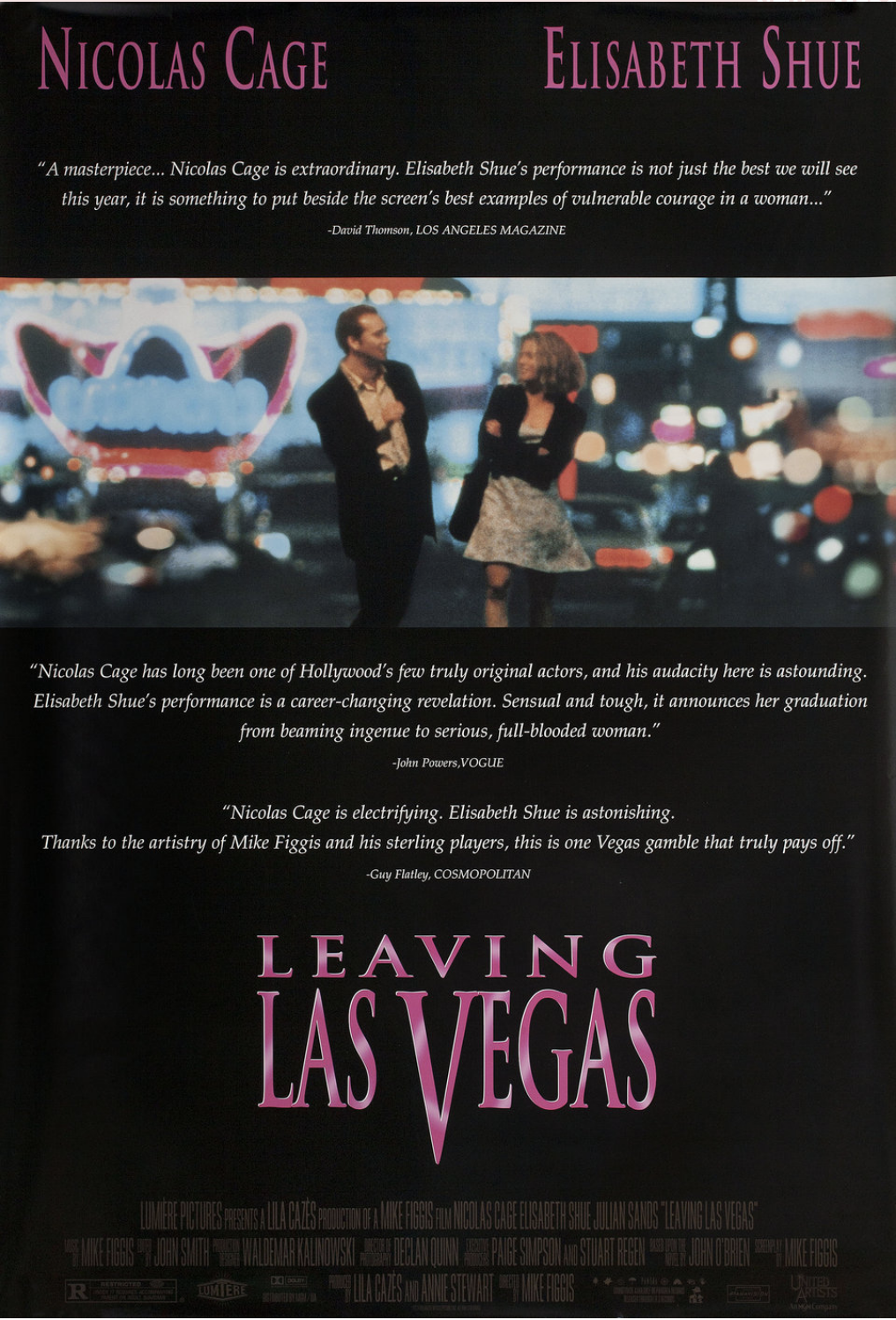
Directed by Mike Figgis | 1995 | 112 min
“I'm tired of being alone. That's what I'm tired of.”
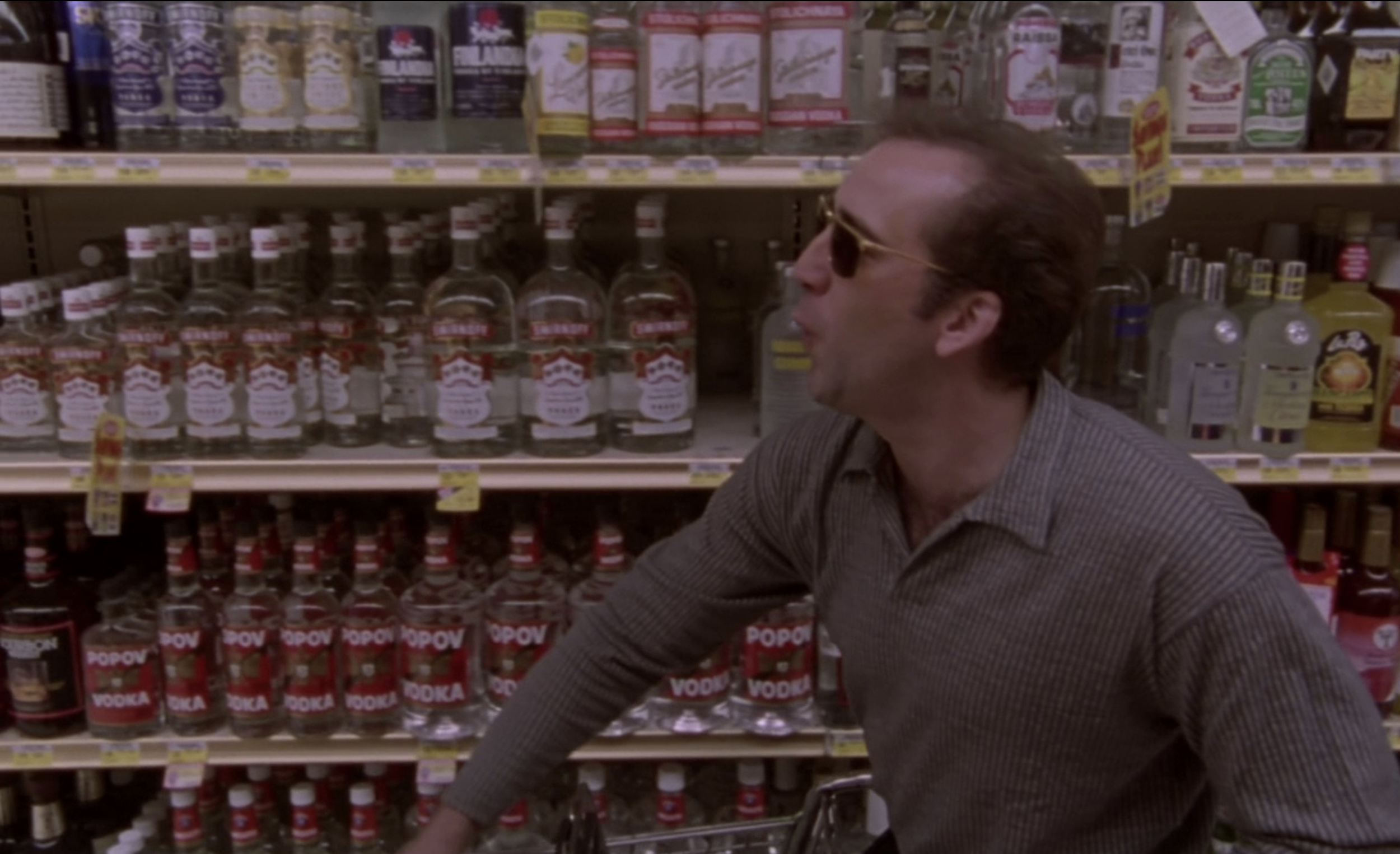
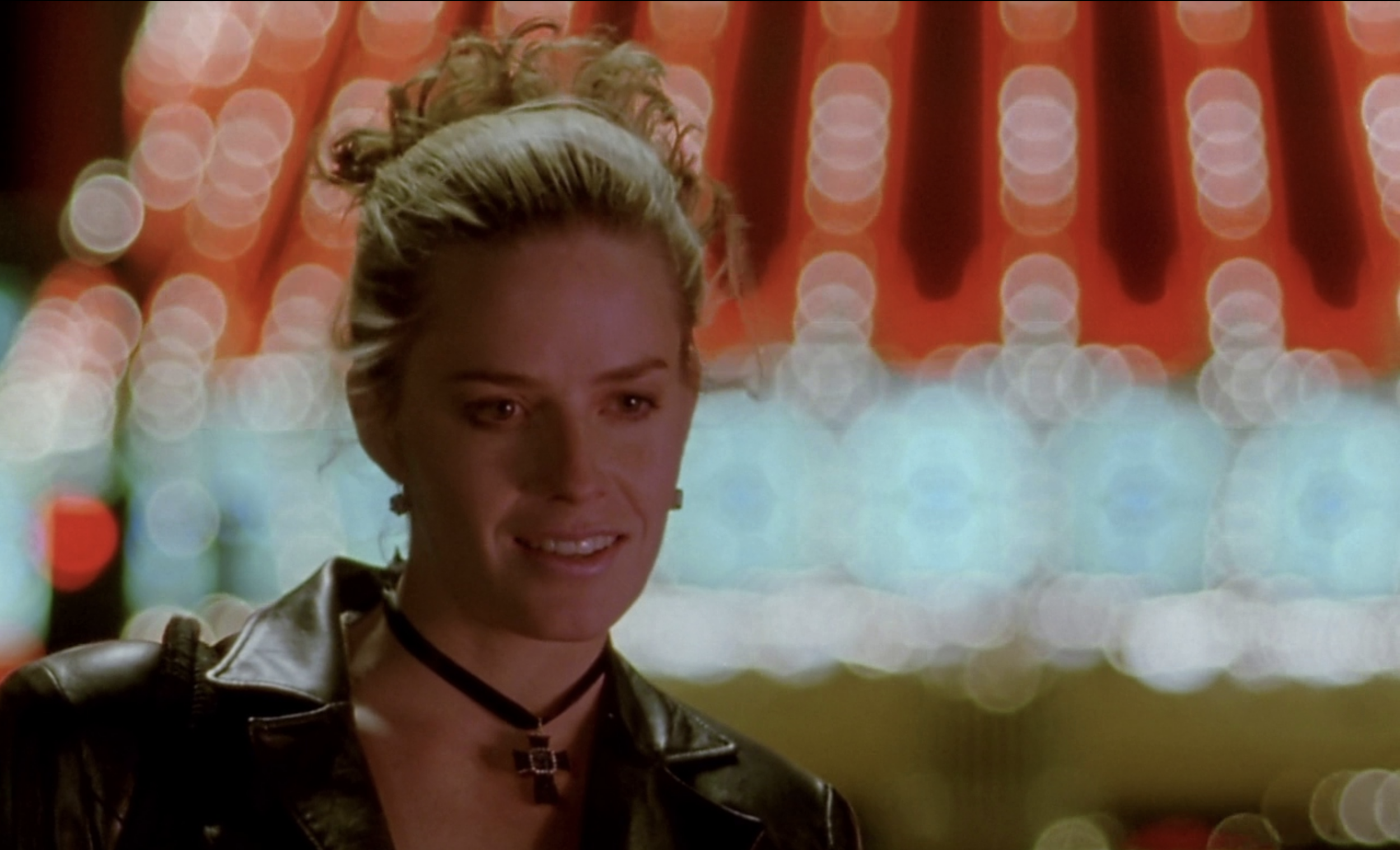
Leaving Las Vegas is not a casual viewing experience. The film follows alcoholic screenwriter Ben Sanderson (Nicholas Cage) as he burns almost all of his belongings and then leaves his Los Angeles home with one mission: to drink himself to death in Las Vegas. Shortly after his arrival there, he meets the prostitute Sera (Elisabeth Shue), and the pair develop a doomed romantic connection.
I first watched the film in college, and most recently watched the film’s 4K premiere in September at The Roxy, where I had the fortune to meet its director Mike Figgis. With each viewing, I discover new elements of the film to appreciate.
The story is undeniably dark. It is based on a partly-autobiographical book by John O’Brien, who ended his own life two weeks after signing away the rights to adapt his novel. Some consider the book his suicide note.
The main actors are unlikely choices and yet fit perfectly. Nicholas Cage had previously been known for over-the-top performances in romantic comedies like Moonstruck. Here, his performance is certainly still extreme, with stumbling drunkenness, enraged outbursts, and trembling night terrors, but the film is the tonal opposite of a romantic comedy – and it works. Elisabeth Shue had previously been known for her roles as the love interest in The Karate Kid and Cocktail, and here is a jaded and abused woman who rediscovers her ability to love. While Ben refuses to stop drinking and Sera refuses to give up her line of work (to each other’s mounting frustration), the one thing they agree upon is to share a home and affection for as long as they can.
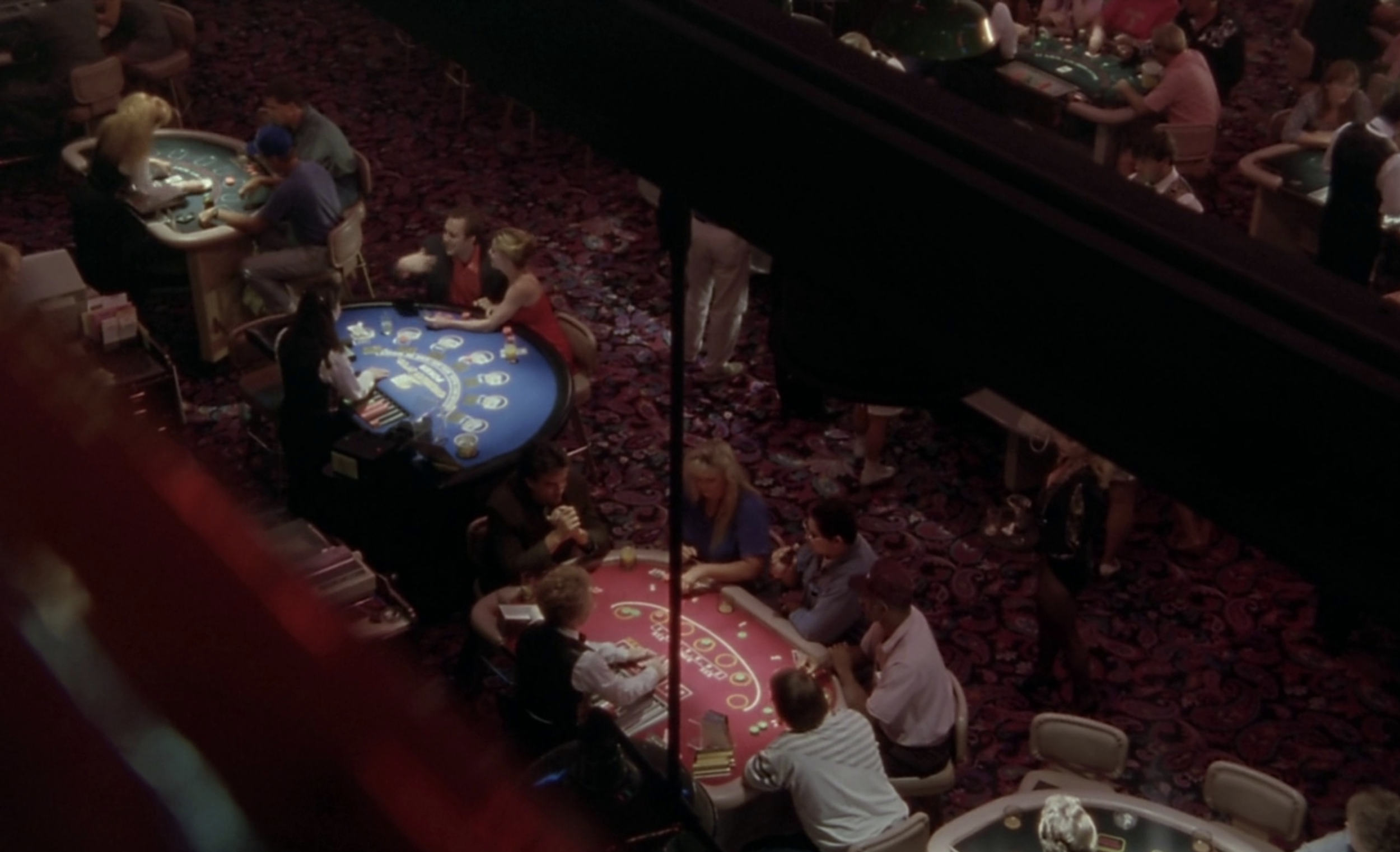
Ben is an experiment in the total degradation of a human being. The film shows what happens when you cut all ties to anything grounding you to life, lose all boundaries and restraints, and subsist on a dwindling stash of money used primarily for booze and gambling. Las Vegas is the perfect backdrop for such self-destruction. The grainy 16mm look captures the fuzzy, drunken haze of a customer on the Strip. The camera lingers on the road’s many resorts — castles and pagan pyramids — modern monuments to decadence.
The soundtrack heightens each emotion. The music alternates between sinister and spiritual. The opening credits sequence features sleazy saxophone lounge music with muffled moaning and operatic singing. Darkly comedic moments are sung over by Sting’s rendition of jazz standards. And interspersed throughout is the hauntingly beautiful Ben and Sera’s Theme.
My goal is to one day make a film that captures a complex feeling as strongly as Leaving Las Vegas. The feeling doesn’t quite make sense, and it is so vivid: it’s a paradoxical combination of despair and hope.
-AJ
LEAVING
LAS VEGAS
Directed by Mike Figgis
1995 | 112 min
“I'm tired of being alone. That's what I'm tired of.”
Leaving Las Vegas is not a casual viewing experience. The film follows alcoholic screenwriter Ben Sanderson (Nicholas Cage) as he burns almost all of his belongings and then leaves his Los Angeles home with one mission: to drink himself to death in Las Vegas. Shortly after his arrival there, he meets the prostitute Sera (Elisabeth Shue), and the pair develop a doomed romantic connection.
I first watched the film in college, and most recently watched the film’s 4K premiere in September at The Roxy, where I had the fortune to meet its director Mike Figgis. With each viewing, I discover new elements of the film to appreciate.
The story is undeniably dark. It is based on a partly-autobiographical book by John O’Brien, who ended his own life two weeks after signing away the rights to adapt his novel. Some consider the book his suicide note.
The main actors are unlikely choices and yet fit perfectly. Nicholas Cage had previously been known for over-the-top performances in romantic comedies like Moonstruck. Here, his performance is certainly still extreme, with stumbling drunkenness, enraged outbursts, and trembling night terrors, but the film is the tonal opposite of a romantic comedy – and it works. Elisabeth Shue had previously been known for her roles as the love interest in The Karate Kid and Cocktail, and here is a jaded and abused woman who rediscovers her ability to love. While Ben refuses to stop drinking and Sera refuses to give up her line of work (to each other’s mounting frustration), the one thing they agree upon is to share a home and affection for as long as they can.
Ben is an experiment in the total degradation of a human being. The film shows what happens when you cut all ties to anything grounding you to life, lose all boundaries and restraints, and subsist on a dwindling stash of money used primarily for booze and gambling. Las Vegas is the perfect backdrop for such self-destruction. The grainy 16mm look captures the fuzzy, drunken haze of a customer on the Strip. The camera lingers on the road’s many resorts — castles and pagan pyramids — modern monuments to decadence.
The soundtrack heightens each emotion. The music alternates between sinister and spiritual. The opening credits sequence features sleazy saxophone lounge music with muffled moaning and operatic singing. Darkly comedic moments are sung over by Sting’s rendition of jazz standards. And interspersed throughout is the hauntingly beautiful Ben and Sera’s Theme.
My goal is to one day make a film that captures a complex feeling as strongly as Leaving Las Vegas. The feeling doesn’t quite make sense, and it is so vivid: it’s a paradoxical combination of despair and hope.
-AJ
