
MOVIE OF THE MONTH
OCT ‘25
MOVIE OF THE MONTH
OCT ‘25

SISTERS
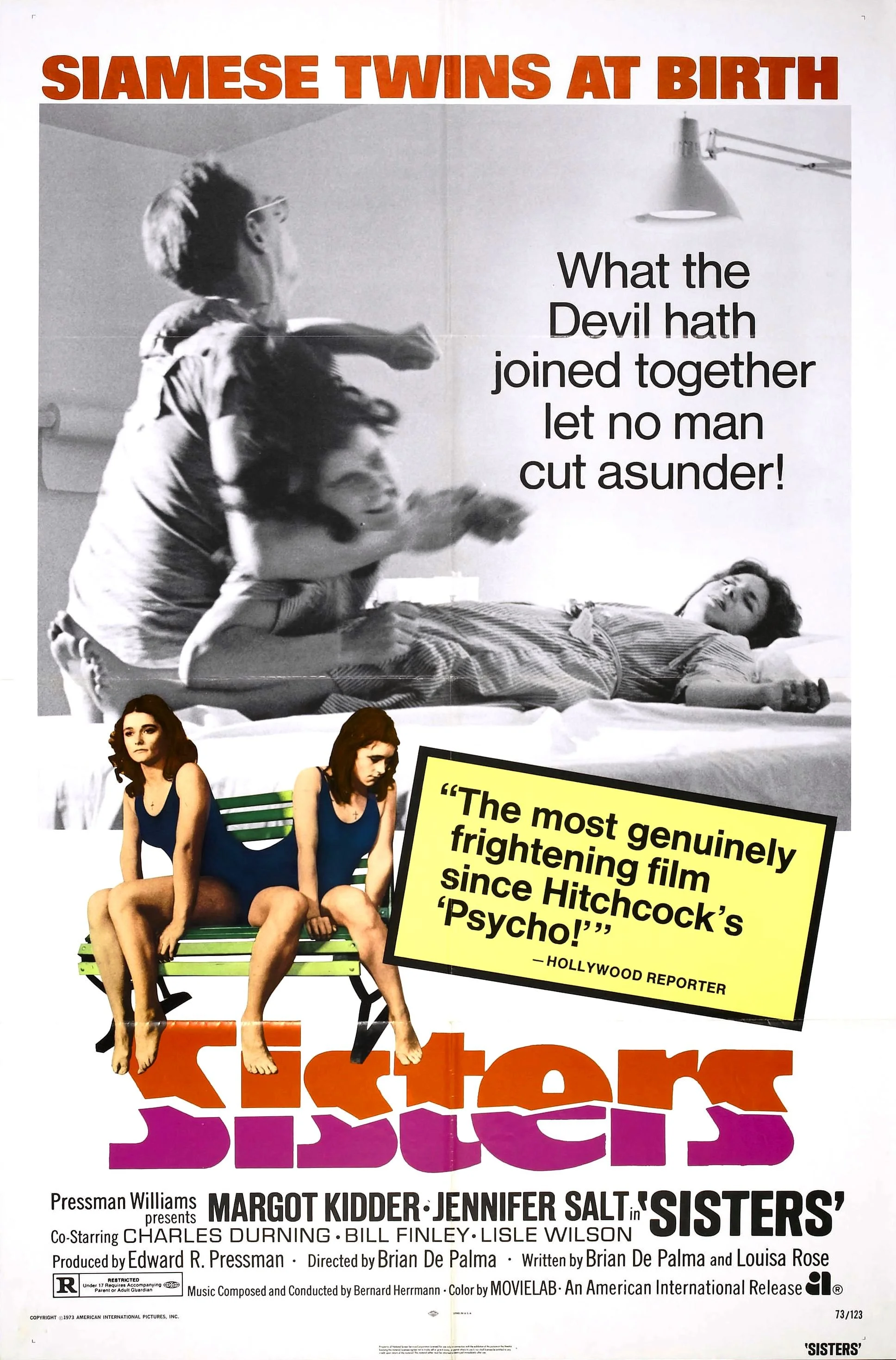
Directed by Brian De Palma | 1972 | 93 min
“I thought you said you
lived in new YORK?”
“ISN’T STATEN ISLAND IN NEW YORK?”
Pizza Box was a hectic shoot for us. The opening scene, along with several interior sequences, had to be filmed with only one camera, as our second Blackmagic was continually dropping frames. Those technical difficulties made the first day of filming rather stressful. So, whenever I found a break between takes over the course of the weekend, I decided to unwind by watching a movie. The one I settled on was Brian De Palma’s Sisters.
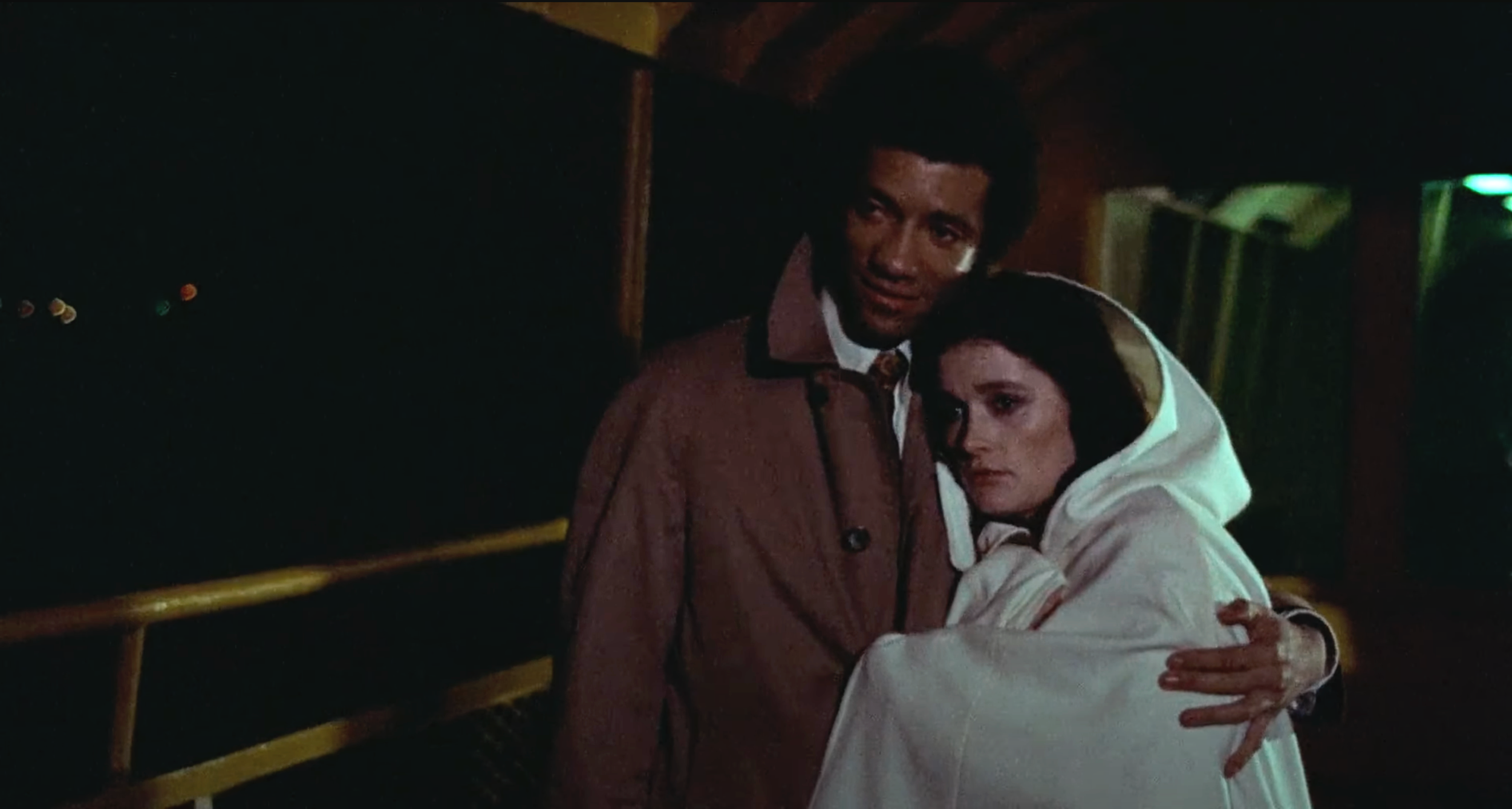
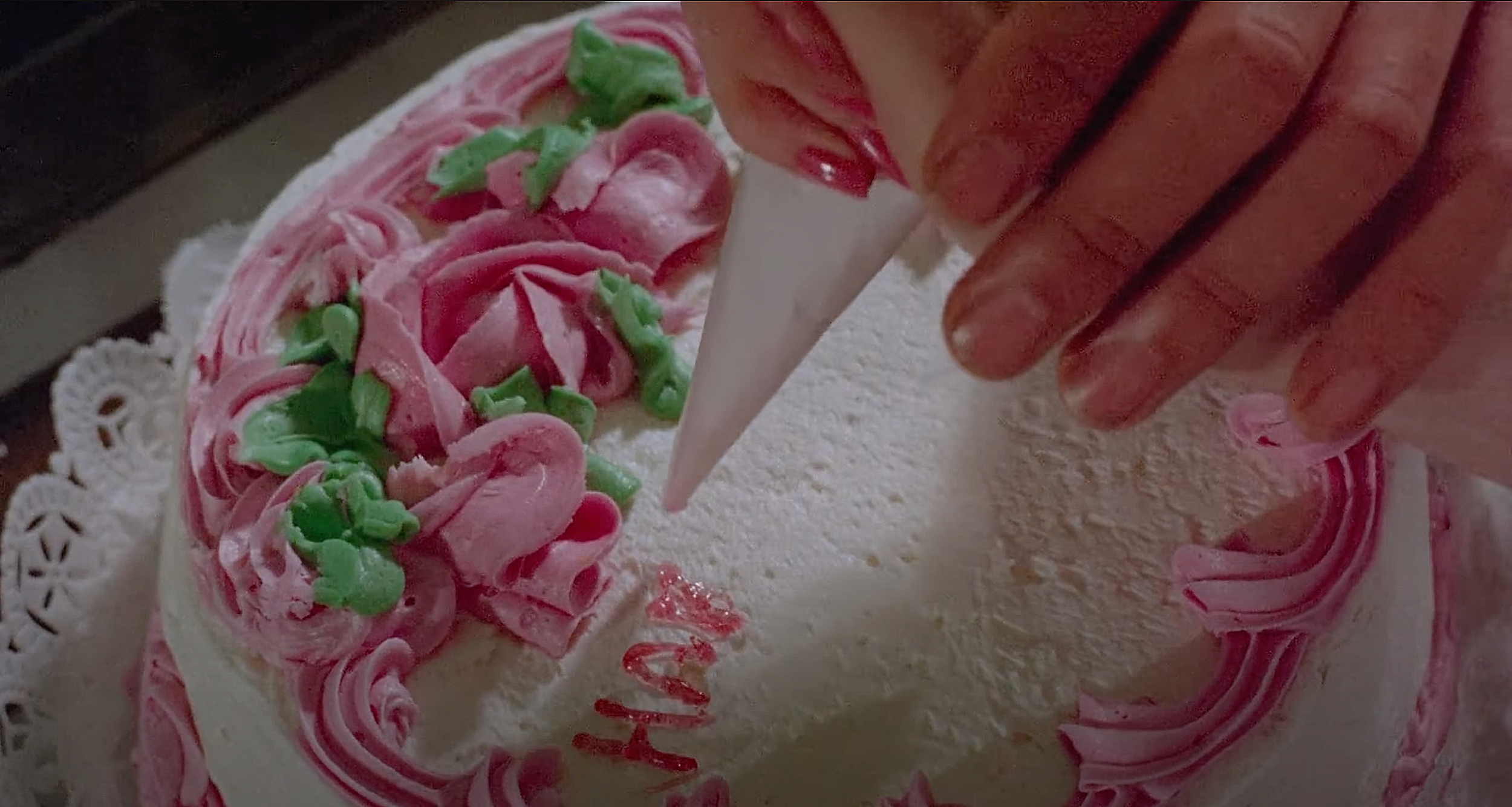
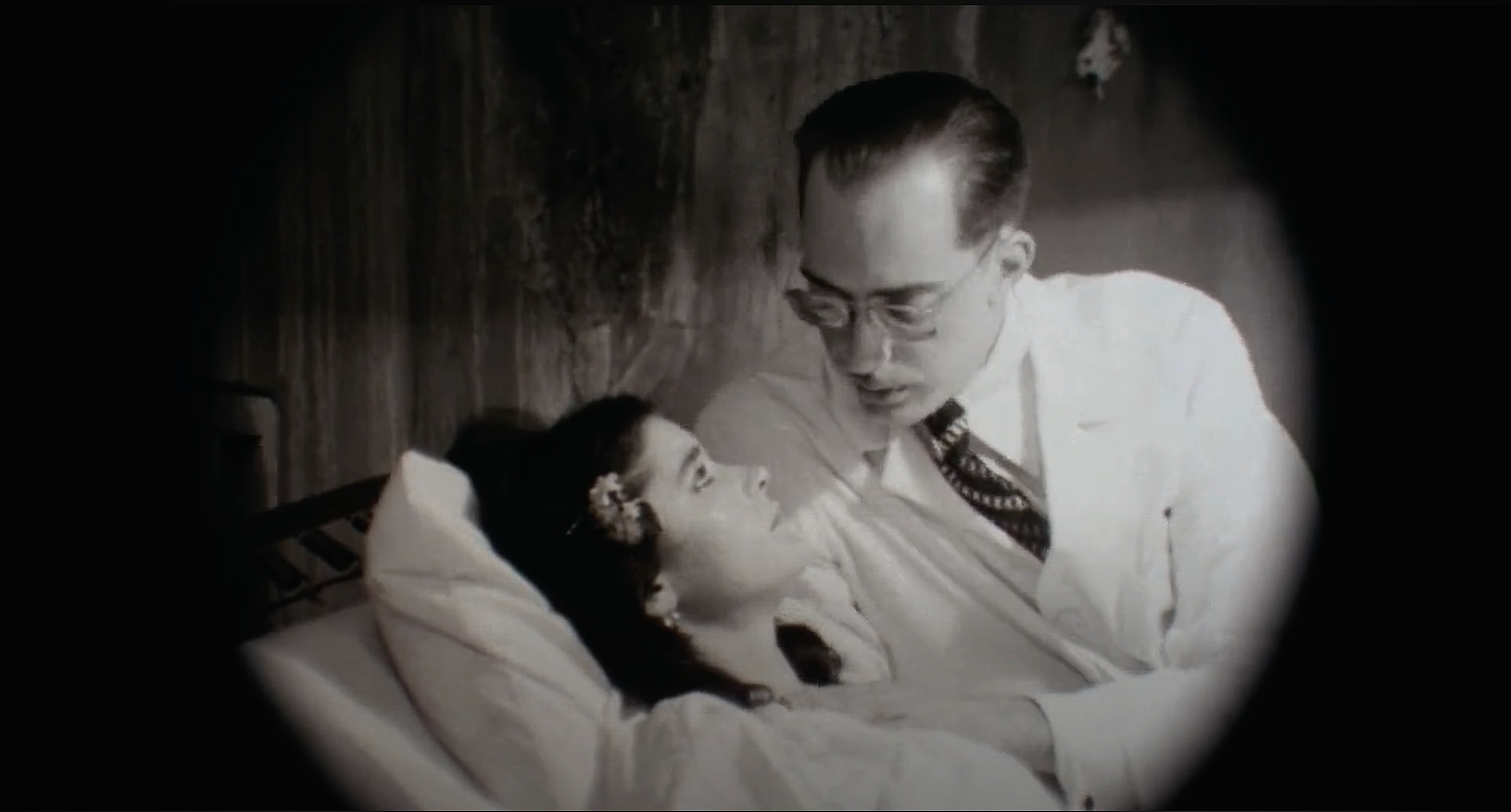
Released in 1972, Sisters is a psychological thriller that follows a young reporter who witnesses what appears to be a murder in the window of the apartment across from hers. When she tries to alert the police, she’s met with skepticism, forcing her to investigate on her own. From there, the film delves into all kinds of weirdness: the accused murderer and her supposed evil twin (both played by Margot Kidder), a birthday cake that serves as important evidence and a private investigator tracking a couch across the country.
Sisters is undoubtedly a silly film. It’s filled with implausible story beats, incompetent characters, and ridiculously convenient plot points (like the aforementioned cake being dismissed as evidence once it’s dropped on the floor). Thankfully, what Sisters is missing in its absurd writing, it makes up for in its camera work and editing. De Palma takes a subpar script—written by himself, strangely enough—and transforms it through visual experimentation.
The film’s most striking moments come in its split-screen sequences, which are the most effective uses of the technique I’ve personally seen on film. Prior to watching Sisters, I’ve always considered this kind of directorial decision to be gimmicky and unfocused. While I don’t think it’s unfair to say that the split-screen in Sisters is gimmicky, it certainly isn’t unfocused. In fact, the sequences establish and build on the suspense of the film.
While many directors pride themselves on showing restraint with the camera, De Palma does the opposite. He allows it to prowl about and move around his set freely. While both approaches to camera movement are valid (look no further than Stanley Kubrick’s Barry Lyndon for the argument in favor of restraint), De Palma’s Sisters reminded me of the beauty in taking risks with a film. Far from perfect, and losing much of its luster by the time it reaches its sluggish final act, there is an underlying love for filmmaking that permeates Sisters. Beneath the movie’s camp and chaos lies a filmmaker testing the limits of what cinematic language can achieve and that, more than anything, is what makes Sisters worth watching.
- Matt

SISTERS
Directed by Brian De Palma
1972 | 93 min
“I thought YOU SAID YOU LIVED IN NEW YORK?”
“ISN’T STATEN ISLAND IN NEW YORK?”
Pizza Box was a hectic shoot for us. The opening scene, along with several interior sequences, had to be filmed with only one camera, as our second Blackmagic was continually dropping frames. Those technical difficulties made the first day of filming rather stressful. So, whenever I found a break between takes over the course of the weekend, I decided to unwind by watching a movie. The one I settled on was Brian De Palma’s Sisters.
Released in 1972, Sisters is a psychological thriller that follows a young reporter who witnesses what appears to be a murder in the window of the apartment across from hers. When she tries to alert the police, she’s met with skepticism, forcing her to investigate on her own. From there, the film delves into all kinds of weirdness: the accused murderer and her supposed evil twin (both played by Margot Kidder), a birthday cake that serves as important evidence and a private investigator tracking a couch across the country.
Sisters is undoubtedly a silly film. It’s filled with implausible story beats, incompetent characters, and ridiculously convenient plot points (like the aforementioned cake being dismissed as evidence once it’s dropped on the floor). Thankfully, what Sisters is missing in its absurd writing, it makes up for in its camera work and editing. De Palma takes a subpar script—written by himself, strangely enough—and transforms it through visual experimentation.
The film’s most striking moments come in its split-screen sequences, which are the most effective uses of the technique I’ve personally seen on film. Prior to watching Sisters, I’ve always considered this kind of directorial decision to be gimmicky and unfocused. While I don’t think it’s unfair to say that the split-screen in Sisters is gimmicky, it certainly isn’t unfocused. In fact, the sequences establish and build on the suspense of the film.
While many directors pride themselves on showing restraint with the camera, De Palma does the opposite. He allows it to prowl about and move around his set freely. While both approaches to camera movement are valid (look no further than Stanley Kubrick’s Barry Lyndon for the argument in favor of restraint), De Palma’s Sisters reminded me of the beauty in taking risks with a film. Far from perfect, and losing much of its luster by the time it reaches its sluggish final act, there is an underlying love for filmmaking that permeates Sisters. Beneath the movie’s camp and chaos lies a filmmaker testing the limits of what cinematic language can achieve and that, more than anything, is what makes Sisters worth watching.
- Matt
