
MOVIE OF THE MONTH
NOV ‘26
MOVIE OF THE MONTH
NOV ‘26

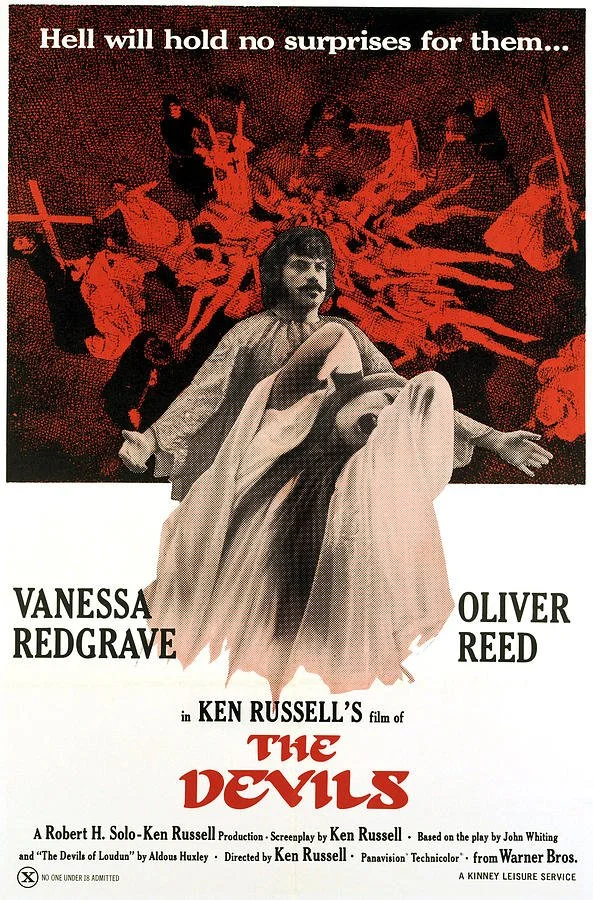
THE DEVILS
Directed by Ken Russell | 1971 | 115 min
“satan is ever ready to seduce
us with sensual delights.”
The film-watching experience does not occur in a vacuum. The way I receive a film is impacted by my headspace and setting at the time of the viewing. In the case of my viewing of the new, uncut, 4K-restored release of The Devils, I was hot, itchy, and tired. I had been awake for nearly 24 consecutive hours and I was wearing an uncomfortable sweater while sitting in a packed, noisy, and stuffy theater in the underground abyss of the AMC Kips Bay. (New York City cinephiles insist that this AMC location is special and deserving of preservation amidst its impending invasion by the NYU Langone Health system. Having trekked out to the subway-barren neighborhood of Kips Bay to see the theater for myself, I was not convinced). The film began, and I was quickly absorbed into its swirling vortex of doom. I recognized the film as compelling art but found it so dark, ominous, and cacophonous at times that I could hardly bear to watch it.
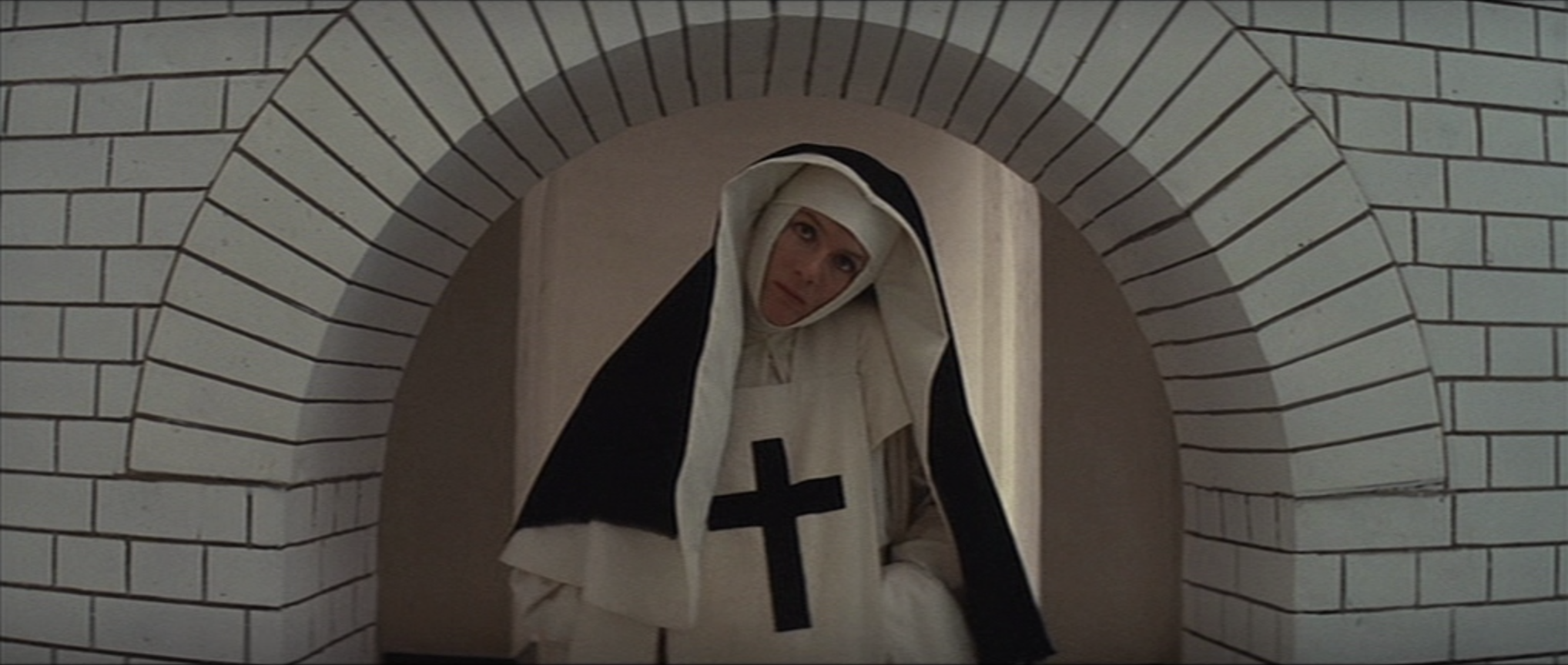
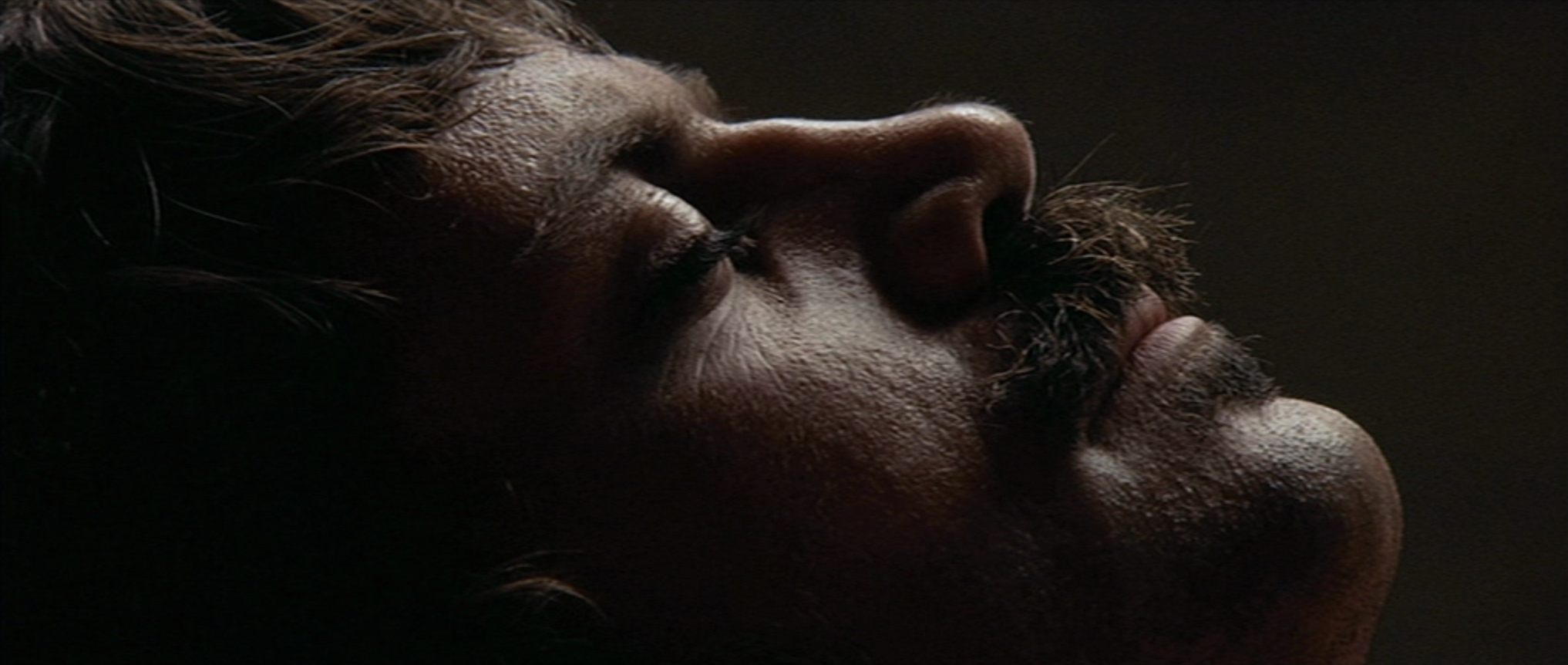
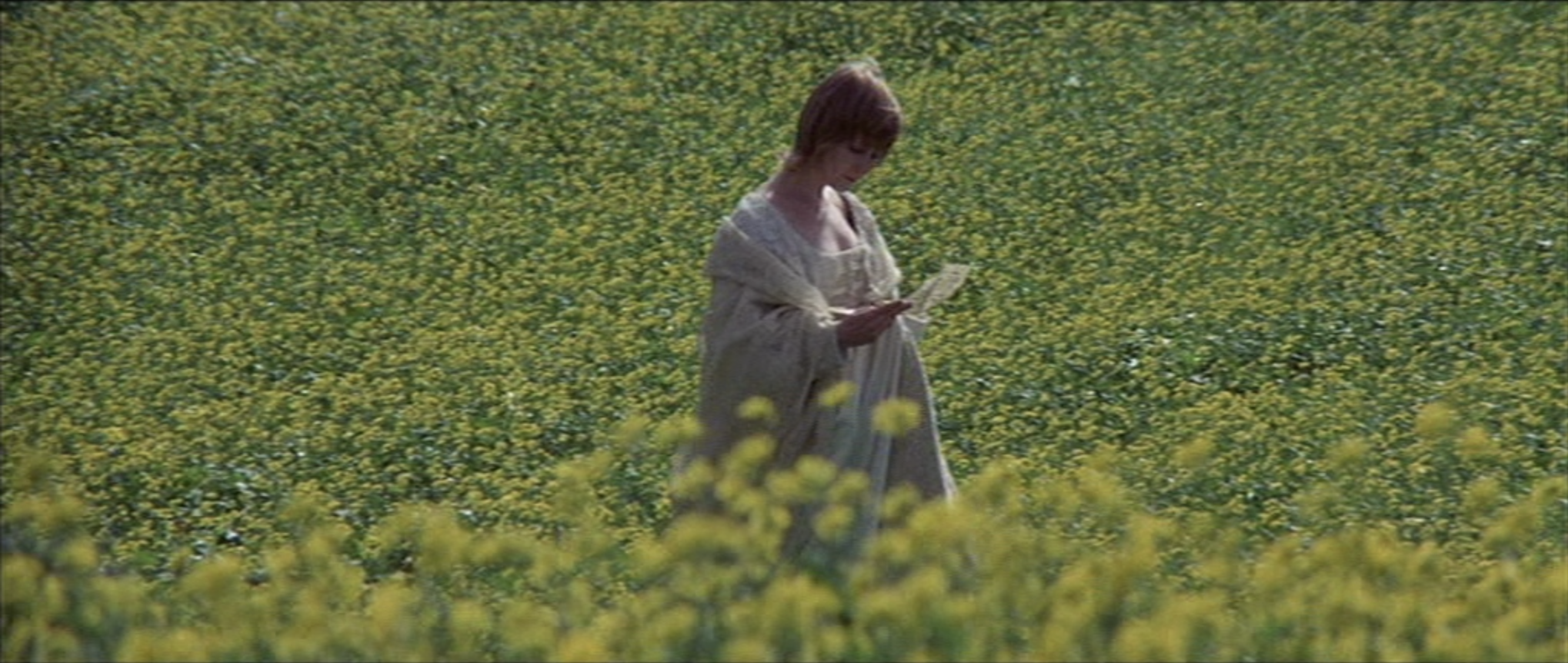
The Devils is based on a true story. It follows the unorthodox, unconventional Catholic priest Urbain Grandier as he leads the city of Loudoun in its political struggle against the French state, which seeks to centralize power and weaken the autonomy of localities like Loudoun. France is embroiled in a violent nationwide struggle between Catholics and Huguenots, but Loudoun has managed to achieve a peaceful coexistence between the groups. Meanwhile, the local nun Sister Jeanne des Anges has developed a sexual obsession with Grandier. When Jeanne learns that Grandier has married a townswoman named Madeleine, Jeanne jealously accuses Grandier of dealing with the devil. These accusations quickly make their way up to high-level Catholic inquisitors and spiral out of control, leading to witch hunts and show trials in Loudoun that leave Grandier dead and the city stripped of its autonomy. While Grandier is being publicly burned at the stake for his supposed witchcraft and the townspeople are distracted by the spectacle of it, the French state destroys Loudon’s city walls. Madeleine wanders out of the ruins into a seemingly endless field, riddled with corpses, as droning music plays. Roll credits.
The film explores many themes. It is a rare, fascinating depiction of a period in history (post-Protestant Reformation) when nation-states started to centralize their power and usurp localities. The end credit scene of The Devils, which is already ominous, is made even darker by the viewer’s knowledge that the villains in the film have won their battle completely, both in France and in nearly every other country. We live in a world of nation-states. In fact, nationalism has won so thoroughly that it is now the provincial political option compared to its apparent successor: globalism. Just as nationalism replaced localism, globalism may now replace nationalism.
The film is an incisive depiction of how political forces use sex scandals and moral panics to distract the public and achieve their aims. It is also a critique of sexual repression, which drove Sister Jeanne mad and caused her to launch the witchcraft accusations which led to the undoing of Loudoun. Still, this is not to say that all religious authority is corrupt and that all sexual behavior is permissible. The director Ken Russell was himself Catholic, and the film’s “Rape of Christ” scene of frenzied nuns molesting a state of Jesus is intended to be shocking, appalling, and aberrant – something which people should not be doing. (Even despite this intent, I find the scene overly-gratuitous and wonder if the 1970s studio censors were correct to put it on the chopping block).
The unrelenting violence, illness, and death in The Devils is a reminder of the wretched, Hobbesian origins of human existence. We are fortunate in modern society to reap the benefits of medicine, religious tolerance, and a legal presumption of innocence. These developments arose gradually and painstakingly in human civilization, and the events of The Devils are a vivid depiction of what life is like in a society where these modern protections are not robust. I am a strong, hardened, film viewer who is usually game to see cruelty on the screen, but The Devils is so extreme in its tone that I found myself pleading to God to let this cup pass from me.
- AJ
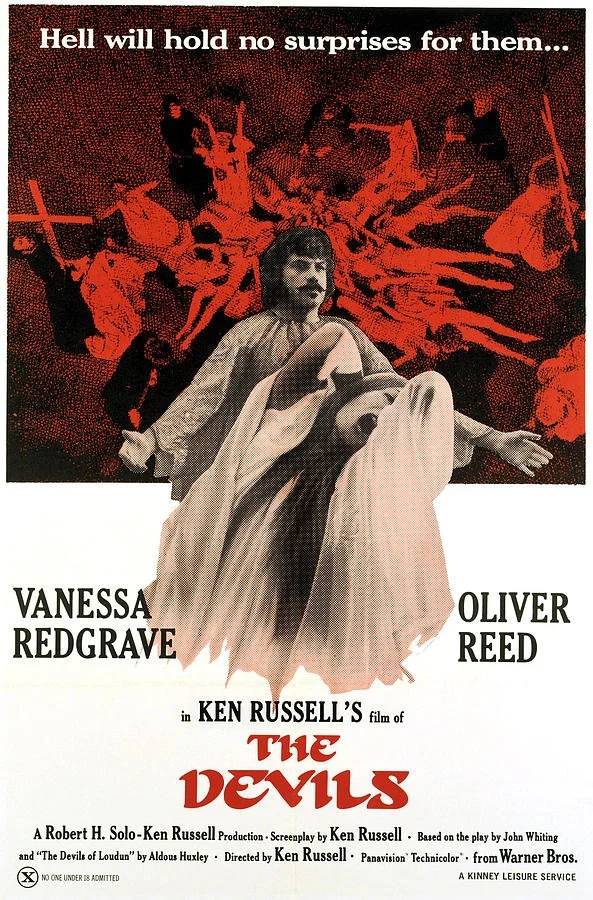
THE
DEVILS
Directed by Ken Russell
1971 | 115 min
“SATAN IS EVER READY TO SEDUCE US WITH SENSUAL DELIGHTS.”
The film-watching experience does not occur in a vacuum. The way I receive a film is impacted by my headspace and setting at the time of the viewing. In the case of my viewing of the new, uncut, 4K-restored release of The Devils, I was hot, itchy, and tired. I had been awake for nearly 24 consecutive hours and I was wearing an uncomfortable sweater while sitting in a packed, noisy, and stuffy theater in the underground abyss of the AMC Kips Bay. (New York City cinephiles insist that this AMC location is special and deserving of preservation amidst its impending invasion by the NYU Langone Health system. Having trekked out to the subway-barren neighborhood of Kips Bay to see the theater for myself, I was not convinced). The film began, and I was quickly absorbed into its swirling vortex of doom. I recognized the film as compelling art but found it so dark, ominous, and cacophonous at times that I could hardly bear to watch it.
The Devils is based on a true story. It follows the unorthodox, unconventional Catholic priest Urbain Grandier as he leads the city of Loudoun in its political struggle against the French state, which seeks to centralize power and weaken the autonomy of localities like Loudoun. France is embroiled in a violent nationwide struggle between Catholics and Huguenots, but Loudoun has managed to achieve a peaceful coexistence between the groups. Meanwhile, the local nun Sister Jeanne des Anges has developed a sexual obsession with Grandier. When Jeanne learns that Grandier has married a townswoman named Madeleine, Jeanne jealously accuses Grandier of dealing with the devil. These accusations quickly make their way up to high-level Catholic inquisitors and spiral out of control, leading to witch hunts and show trials in Loudoun that leave Grandier dead and the city stripped of its autonomy. While Grandier is being publicly burned at the stake for his supposed witchcraft and the townspeople are distracted by the spectacle of it, the French state destroys Loudon’s city walls. Madeleine wanders out of the ruins into a seemingly endless field, riddled with corpses, as droning music plays. Roll credits.
The film explores many themes. It is a rare, fascinating depiction of a period in history (post-Protestant Reformation) when nation-states started to centralize their power and usurp localities. The end credit scene of The Devils, which is already ominous, is made even darker by the viewer’s knowledge that the villains in the film have won their battle completely, both in France and in nearly every other country. We live in a world of nation-states. In fact, nationalism has won so thoroughly that it is now the provincial political option compared to its apparent successor: globalism. Just as nationalism replaced localism, globalism may now replace nationalism.
The film is an incisive depiction of how political forces use sex scandals and moral panics to distract the public and achieve their aims. It is also a critique of sexual repression, which drove Sister Jeanne mad and caused her to launch the witchcraft accusations which led to the undoing of Loudoun. Still, this is not to say that all religious authority is corrupt and that all sexual behavior is permissible. The director Ken Russell was himself Catholic, and the film’s “Rape of Christ” scene of frenzied nuns molesting a state of Jesus is intended to be shocking, appalling, and aberrant – something which people should not be doing. (Even despite this intent, I find the scene overly-gratuitous and wonder if the 1970s studio censors were correct to put it on the chopping block).
The unrelenting violence, illness, and death in The Devils is a reminder of the wretched, Hobbesian origins of human existence. We are fortunate in modern society to reap the benefits of medicine, religious tolerance, and a legal presumption of innocence. These developments arose gradually and painstakingly in human civilization, and the events of The Devils are a vivid depiction of what life is like in a society where these modern protections are not robust. I am a strong, hardened, film viewer who is usually game to see cruelty on the screen, but The Devils is so extreme in its tone that I found myself pleading to God to let this cup pass from me.
- AJ
