
MOVIE OF THE MONTH
APRIL ‘26
MOVIE OF THE MONTH
APRIL ‘26


FAT GIRL
Directed by Catherine Breillat | 2001 | 86 min
“It’s like hating a part of myself. That’s why i loathe you so violently.”
I don’t know what it’s like to be fat.
I’ve never been fat.
In fact, for as long as I can remember, I’ve been skinny enough to be called scrawny and often still am. My rib cage remains partly visible, protruding from just below the surface of my skin. I can recall being teased as a boy for my appearance, being compared to all manner of gangly creatures and horrific characters in the schoolyard. My oversized nose, my short stature, the mole that sits below my lower lip; all elements of my appearance that I was made aware of at an early age. Elements that I remain aware of today.
I don’t know what it’s like to be fat. But I do know what it’s like to wish the body you were born into had been a different one. And it’s that same desire that sits at the heart of Breillat’s film Fat Girl.
Admittedly, Fat Girl wasn’t a movie I was looking forward to rewatching for this installment of Movie of the Month. It’s less than an hour and a half long but its runtime is filled with brutality, both emotional and physical. Breillat’s honest depiction of human nature cuts through layers of fat tissue and goes straight for the bone. Its ending, like watching that bone finally snap, is inevitable. There is nothing we can do as passive viewers to stop it.
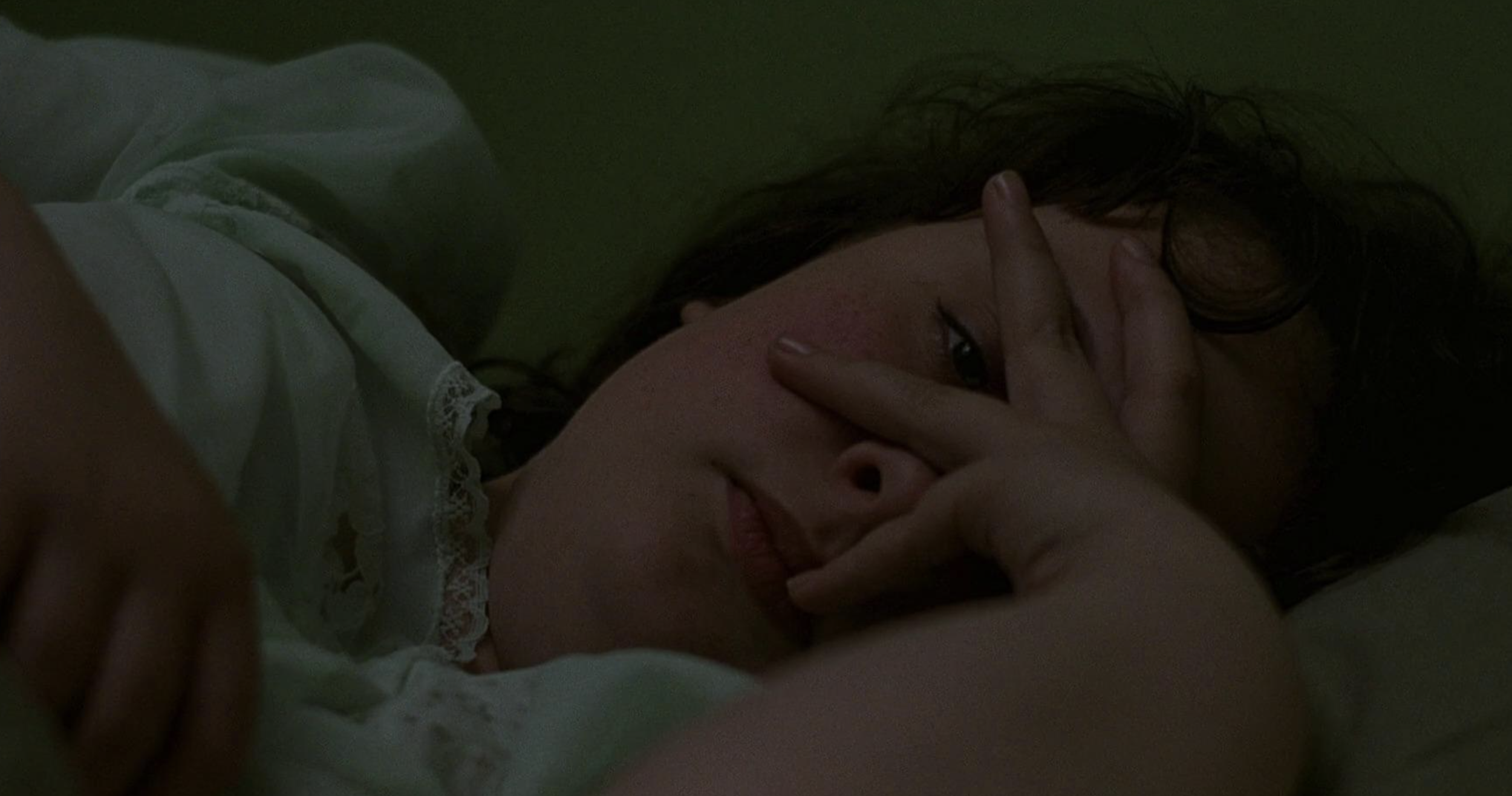
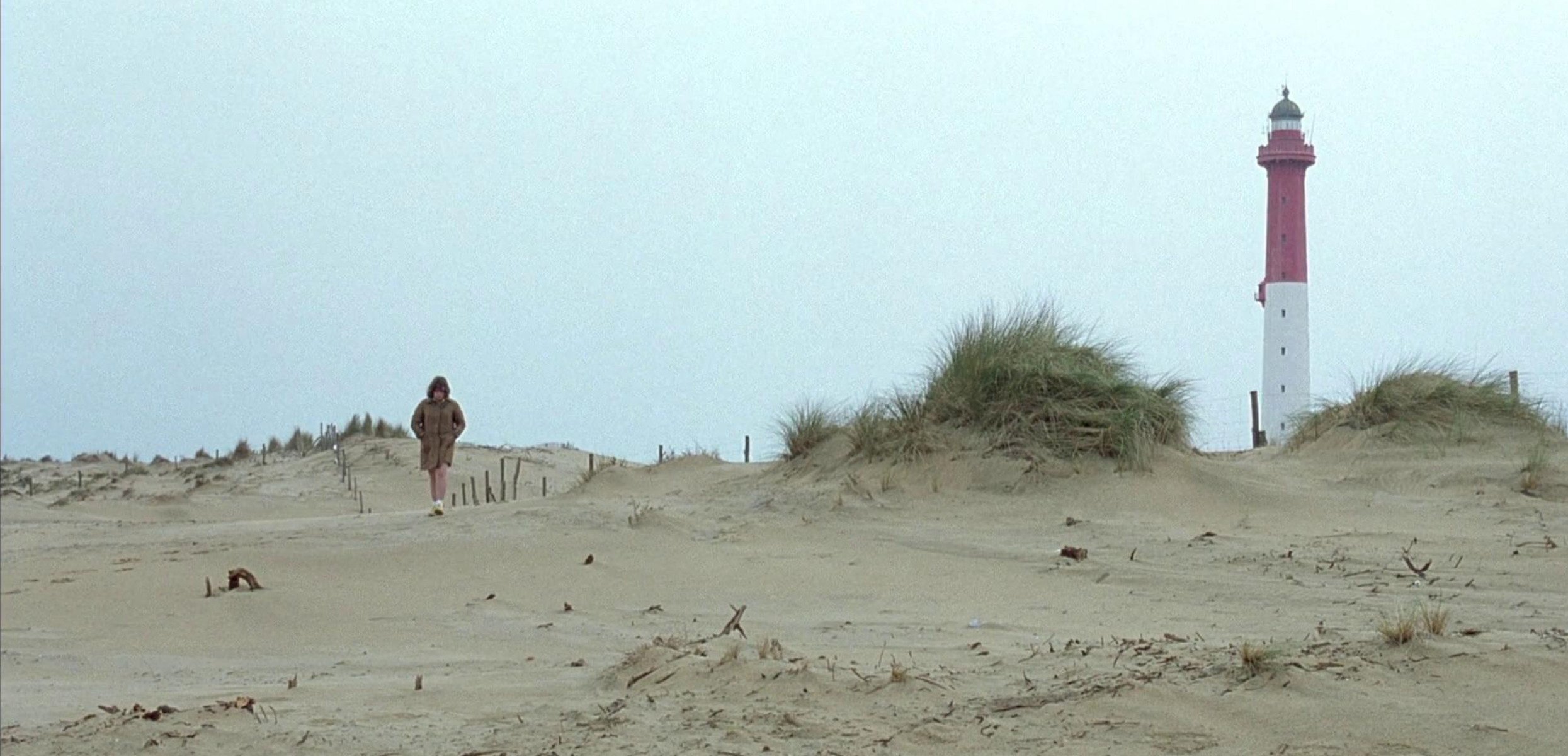
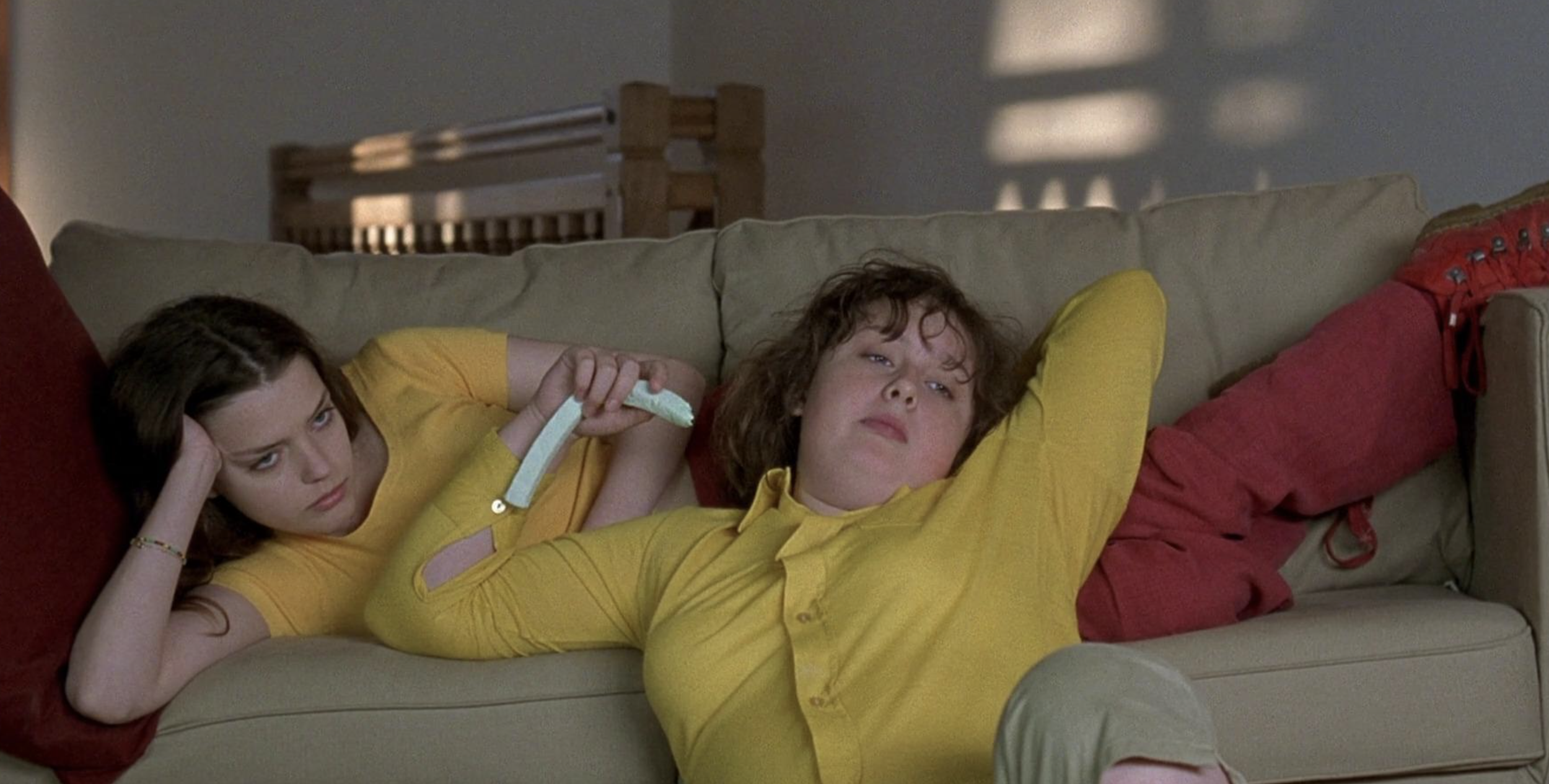
The film follows twelve-year-old Anaïs (Anaïs Reboux) and her older sister Elena (Roxane Mesquida) as they vacation in a coastal French town. While Anaïs is overweight and mocked for her size, Elena is a pretty girl who becomes the object of boys’ interest rather easily. The disconnect between the two girls’ experiences, and their parallel suffering, drives Breillat’s narrative. Over the course of the film, the two are revealed as opposite sides of the same coin. On one side, Anaïs is belittled for the shape of her body and desires to be loved and embraced. In one scene she swims and kisses the metal ladders of a pool, fantasizing they are boys who are madly in love with her. But Anaïs has also seen the other side of the coin, Elena, and how her appearance has not brought love, only male infatuation and pain. And how with that infatuation comes a different kind of belittlement and subjugation.
What in its first fleeting moments appears to be a coming-of-age story about girlhood transforms into something darker through Elena’s relationship with her summer fling, Fernando (Libero De Rienzo). In one of the most painful sequences of the film, Elena, whose life-long intention has been to give her virginity to a boy she loves, is manipulated by Fernando. Anaïs listens as her sister, with whom she shares a bedroom, is coerced into sex and sodomized.
As the audience, we see through the thin veil of Fernando’s supposed love for Elena. But Elena, who has been conditioned to believe that her value is dependent upon her appearance, cannot allow herself to disappoint him. She is desperately afraid that if she does not give herself to Fernando, he will discover the emptiness that she perceives at the center of her being. And because Fernando claims to care for Elena beyond her body, she will do anything to preserve the idea that someone, especially a boy, can love her for more than her flesh. Through this act of sexual violence, Breillat refuses to frame desirability as power. Instead, she exposes a woman’s desirability as a form of entrapment.
For much of the film, Anaïs is a bystander. She third wheels the meeting between Fernando and Elena at the film’s outset and later trails behind as the couple visits a nearby beach. From irritation to eventual devastation, she bears witness to Elena’s coerced sodomy and later to her giving in to vaginal sex with Fernando. The dynamic between the two sisters feels like a harsher, more psychologically complex precursor to that of Cassie Howard and Lexi Howard in Euphoria. One sister exists as an invisible observer, the other as a performer for the male gaze, surrendering her body in exchange for the brief high of being desired.
After their visit to the beach, Elena reveals to Anaïs that Fernando has proposed to her. Soon Fernando’s mother comes looking for the ring which is revealed to have been stolen from her. Upon learning this, and details of Elena and Fernando’s relationship, the girls’ mother becomes enraged. The family leaves immediately to return to their home in Paris. On the drive, Breillat builds suspense. There is an inescapable sense that something awful is going to happen. Semi-trailer trucks surround their small car on the highway. Horns blare. A truck cuts them off. An accident seems unavoidable. But it never comes. The women reach a roadside rest stop for the night.
Then comes a man. He bursts through their windshield in an act of extreme and sudden violence. Anaïs remains passive as the man murders her sister with an axe. She looks on still as the man strangles her mother. She is then brought into the woods and raped. Here, Breillat makes bystanders of the audience as that role is transferred from Anaïs to the viewer. It is only in the final words of the film that Anaïs rejects her role as bystander and becomes an active player in its story. As police arrive at the scene they discuss Anaïs’ insistence that she was not raped. In an effort to take control of her own narrative, Anaïs has reframed the assault as consensual. Yet Breillat denies us direct access to her voice. It is through a male police officer that these words are relayed to us. Even in the act of reclaiming her narrative, her story remains filtered through men.
The sense of foreboding that emerges in the family’s drive home is emblematic of the larger reality Breillat is constructing throughout the film. To be a woman is to be trapped, and the world constructed by men is the cage. Whether desirable or otherwise, both sisters suffer under the weight of male perception. Their fates, though varied, are determined by the violent and sexual whims of a man. In Breillat’s world, there is no way to safely exist as a woman.
The impact of Fat Girl comes from the decision to follow two young girls rather than adult women. Adolescence is when we first learn what to love and hate about our bodies, long before we have grown into them or come to understand what they will mean for us. I remain hyper-aware of my physical flaws today because of the pieces of me that were picked apart as a boy. Breillat captures with this film how, in childhood, small comments have large ramifications. Like throwing a stone into the ocean, it does not simply disappear, it sinks deeper. Though the stone may no longer be visible from the shore, it still remains.
- Matt

FAT GIRL
Directed by Catherine Breillat
2001 | 86 min
“It’s like hating a part of myself. That’s why i loathe you so violently.”
I don’t know what it’s like to be fat.
I’ve never been fat.
In fact, for as long as I can remember, I’ve been skinny enough to be called scrawny and often still am. My rib cage remains partly visible, protruding from just below the surface of my skin. I can recall being teased as a boy for my appearance, being compared to all manner of gangly creatures and horrific characters in the schoolyard. My oversized nose, my short stature, the mole that sits below my lower lip; all elements of my appearance that I was made aware of at an early age. Elements that I remain aware of today.
I don’t know what it’s like to be fat. But I do know what it’s like to wish the body you were born into had been a different one. And it’s that same desire that sits at the heart of Breillat’s film Fat Girl.
Admittedly, Fat Girl wasn’t a movie I was looking forward to rewatching for this installment of Movie of the Month. It’s less than an hour and a half long but its runtime is filled with brutality, both emotional and physical. Breillat’s honest depiction of human nature cuts through layers of fat tissue and goes straight for the bone. Its ending, like watching that bone finally snap, is inevitable. There is nothing we can do as passive viewers to stop it.
The film follows twelve-year-old Anaïs (Anaïs Reboux) and her older sister Elena (Roxane Mesquida) as they vacation in a coastal French town. While Anaïs is overweight and mocked for her size, Elena is a pretty girl who becomes the object of boys’ interest rather easily. The disconnect between the two girls’ experiences, and their parallel suffering, drives Breillat’s narrative. Over the course of the film, the two are revealed as opposite sides of the same coin. On one side, Anaïs is belittled for the shape of her body and desires to be loved and embraced. In one scene she swims and kisses the metal ladders of a pool, fantasizing they are boys who are madly in love with her. But Anaïs has also seen the other side of the coin, Elena, and how her appearance has not brought love, only male infatuation and pain. And how with that infatuation comes a different kind of belittlement and subjugation.
What in its first fleeting moments appears to be a coming-of-age story about girlhood transforms into something darker through Elena’s relationship with her summer fling, Fernando (Libero De Rienzo). In one of the most painful sequences of the film, Elena, whose life-long intention has been to give her virginity to a boy she loves, is manipulated by Fernando. Anaïs listens as her sister, with whom she shares a bedroom, is coerced into sex and sodomized.
As the audience, we see through the thin veil of Fernando’s supposed love for Elena. But Elena, who has been conditioned to believe that her value is dependent upon her appearance, cannot allow herself to disappoint him. She is desperately afraid that if she does not give herself to Fernando, he will discover the emptiness that she perceives at the center of her being. And because Fernando claims to care for Elena beyond her body, she will do anything to preserve the idea that someone, especially a boy, can love her for more than her flesh. Through this act of sexual violence, Breillat refuses to frame desirability as power. Instead, she exposes a woman’s desirability as a form of entrapment.
For much of the film, Anaïs is a bystander. She third wheels the meeting between Fernando and Elena at the film’s outset and later trails behind as the couple visits a nearby beach. From irritation to eventual devastation, she bears witness to Elena’s coerced sodomy and later to her giving in to vaginal sex with Fernando. The dynamic between the two sisters feels like a harsher, more psychologically complex precursor to that of Cassie Howard and Lexi Howard in Euphoria. One sister exists as an invisible observer, the other as a performer for the male gaze, surrendering her body in exchange for the brief high of being desired.
After their visit to the beach, Elena reveals to Anaïs that Fernando has proposed to her. Soon Fernando’s mother comes looking for the ring which is revealed to have been stolen from her. Upon learning this, and details of Elena and Fernando’s relationship, the girls’ mother becomes enraged. The family leaves immediately to return to their home in Paris. On the drive, Breillat builds suspense. There is an inescapable sense that something awful is going to happen. Semi-trailer trucks surround their small car on the highway. Horns blare. A truck cuts them off. An accident seems unavoidable. But it never comes. The women reach a roadside rest stop for the night.
Then comes a man. He bursts through their windshield in an act of extreme and sudden violence. Anaïs remains passive as the man murders her sister with an axe. She looks on still as the man strangles her mother. She is then brought into the woods and raped. Here, Breillat makes bystanders of the audience as that role is transferred from Anaïs to the viewer. It is only in the final words of the film that Anaïs rejects her role as bystander and becomes an active player in its story. As police arrive at the scene they discuss Anaïs’ insistence that she was not raped. In an effort to take control of her own narrative, Anaïs has reframed the assault as consensual. Yet Breillat denies us direct access to her voice. It is through a male police officer that these words are relayed to us. Even in the act of reclaiming her narrative, her story remains filtered through men.
The sense of foreboding that emerges in the family’s drive home is emblematic of the larger reality Breillat is constructing throughout the film. To be a woman is to be trapped, and the world constructed by men is the cage. Whether desirable or otherwise, both sisters suffer under the weight of male perception. Their fates, though varied, are determined by the violent and sexual whims of a man. In Breillat’s world, there is no way to safely exist as a woman.
The impact of Fat Girl comes from the decision to follow two young girls rather than adult women. Adolescence is when we first learn what to love and hate about our bodies, long before we have grown into them or come to understand what they will mean for us. I remain hyper-aware of my physical flaws today because of the pieces of me that were picked apart as a boy. Breillat captures with this film how, in childhood, small comments have large ramifications. Like throwing a stone into the ocean, it does not simply disappear, it sinks deeper. Though the stone may no longer be visible from the shore, it still remains.
- Matt
